


 2026-07-14
Report by Mao Lijuan: On July 2, the three-day 9th Guangzhou International Refrigeration, Heating, Ventilation and Air Conditioning Exhibition concluded at Zone C of the Canton Fair Complex. Mayer Technology, a subsidiary of Hong Kong-listed enterprise Huiyuan Cowins (01116.HK), showcased a full suite of PCM phase-change energy storage solutions at Booth G23/25, empowering low-carbon industrial transformation with innovative technologies.

(Mayer Technology Exhibition Booth)
Driven by multiple policies including the Dual Carbon Strategy, the 15th Five-Year Plan for Comprehensive Energy Development, and energy-saving renovation projects for computing centers, cold chains and zero-carbon industrial parks, the market for new phase-change energy storage materials as core carriers for cold and heat storage keeps expanding. Nevertheless, the whole industry is still at a stage where laboratory technologies are mature yet systematic defects exist in industrialized implementation. Huiyuan Cowins has strategically deployed the phase-change energy storage track. Through its subsidiary Guangzhou Mayer Co., Ltd., it has established in-depth cooperation with EPS, a global leader in phase-change energy storage. EPS holds a 30% stake in Mayer Technology and provides core patented technologies covering a full temperature range from -100°C to 1200°C, embarking on an international development path via global technological collaboration.
Guangzhou Mayer Co., Ltd., the core subsidiary of Huiyuan Cowins, was founded in 1995 with a 31-year history and a production base covering 55,000 square meters. It is China’s first manufacturer with complete integrated production capacity for inorganic phase-change materials, operating 9 production lines with a minimum annual output of 20,000 tons.
Zhang Yana, Director of Huiyuan Cowins and General Manager of Guangzhou Mayer Co., Ltd., introduced that the group entered the trillion-yuan phase-change energy storage track after in-depth feasibility research and assessment. Benefiting from the dividends of Dual Carbon policies, China faces a shortage of high-end full-temperature-range phase-change materials applicable to zero-carbon parks, computing centers, long-distance cold chains and modern agriculture. The industry maintains stable prices and considerable profit margins.
UK-based EPS, the cooperation partner, is a global leader in phase-change materials with 45 years of industry experience. Its technologies cover four major scenarios: central air conditioning, cold chain logistics, modern agriculture and clean heating. Having cultivated the Chinese market for many years, EPS finally chose Mayer, mainly recognizing its 31 years of manufacturing heritage, full-chain delivery capacity and government & enterprise channel advantages. The British side aims to launch high-end PCM technologies through the joint venture and jointly explore global markets relying on Mayer’s production capacity; Mayer owns a mature independent R&D system, enabling an all-round powerful alliance between the two parties covering technology, production lines and channels.

(Zhang Yana, Director of Huiyuan Cowins and General Manager of Guangzhou Mayer Co., Ltd.)
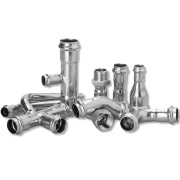
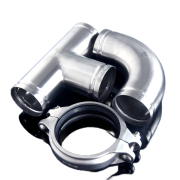
When talking about the significance of this strategic cooperation, Zhang Yana summarized it as "Arranging PCM new material business can help Mayer transform from a traditional manufacturing enterprise to a technology enterprise." She pointed out that on one hand, the group’s original traditional carbon steel and stainless steel businesses develop stably and sustainably; on the other hand, the group itself owns a mature independent R&D system. By establishing a joint venture with EPS to exclusively introduce this world-leading core phase-change technology and enter the trillion-yuan energy storage track, the group aims to create its second growth curve and realize comprehensive multi-business development.
For the whole industry, Mayer Technology positions itself as a pacesetter in the phase-change materials sector. Cooperating with the British side, it actively participates in formulating group standards and national standards, continuously improves domestic industrial specifications for phase-change energy storage, delivers full-set localized carbon reduction renovation solutions for zero-carbon parks, computing centers, cold chains and agriculture, fills gaps in China’s high-end energy storage technologies, guides the industry toward high-quality development and supports the implementation of the national Dual Carbon Strategy.
EPS Full-Temperature Patents Build Barriers to Expand the Group’s Second Growth Curve
As the pioneer in the global phase-change materials field and world-leading supplier of phase-change energy storage technologies, EPS has applied its core technologies to four major business segments covering central air conditioning, cold chain logistics, modern agriculture and clean heating, forming a full-scenario technical matrix ranging from cooling to heating. Its technical advantage is reflected in "full-temperature coverage" — ranging from cryogenic -100°C to ultra-high 1200°C, far exceeding the 0°C–80°C medium-temperature limitation of most domestic enterprises;
Zafer Ure, Founder of EPS, disclosed in an interview that EPS technologies have been verified in numerous global landmark projects after multi-scenario tests worldwide. For public medical and government institutions, a 45m³ storage tank (2000kWh energy storage capacity) at the Netherlands Cancer Institute reduces research costs by utilizing low electricity prices at night. In the industrial production sector, the project of China Tobacco Mauduit (Jiangmen) Paper Industry Co., Ltd. adjusts the cooling capacity of chillers in real time to precisely match the actual cooling demand of workshops and ensure the continuous efficient operation of main refrigeration units. Combined with off-peak power utilization and peak shaving & valley filling of power grids, it can not only reduce corporate operating costs but also achieve energy conservation and emission reduction, providing efficient solutions for constant temperature and humidity environments in industrial workshops.

(Zafer Ure, Founder of EPS)
In Zafer Ure’s view, EPS chose Mayer Technology as its strategic partner mainly for its localized advantages. On one hand, Mayer owns a stable customer base in traditional material processing and has established close cooperation with official institutions such as the Engineering Construction Service Center of the Ministry of Agriculture and Rural Affairs and data center operators, enabling rapid technology implementation. On the other hand, its full-chain delivery capacity and mass production capacity can provide solid support for cost control.
Reshape Industrial Competition Logic and Build Three Unreplicable Moats
By combining EPS’s world-leading technologies and Mayer’s complete local industrial chain resources, the joint venture plans to construct three hard-to-replicate competitive moats. First, technical moat: world-leading technical strength, integrated delivery capacity and a large number of global demonstration projects. Second, policy moat: dual qualifications as a Hong Kong-listed entity and international sci-tech cooperation partner, enabling priority application for various special subsidies and industrial support policies for national zero-carbon park renovation, industrial energy efficiency and green manufacturing. Third, standard moat: the Chinese and British sides hold multiple independent invention patents, take the lead in drafting segmented technical specifications for energy storage applications in zero-carbon parks and seize discourse power over the formulation of industrial rules.
Zhang Yana introduced that the joint venture’s capacity planning will be implemented steadily in two phases. The Phase I PCM production line was put into operation in 2023 with an annual output of 20,000 tons. Phase II expansion will be carried out opportunistically according to the growth of domestic and overseas energy-saving renovation orders.
In terms of corporate performance, the joint venture’s phase-change energy storage and integrated zero-carbon transformation businesses will gradually generate revenue starting in 2026, with full capacity release across all production lines in 2027. Zhang Yana said that the gross profit margin of the phase-change energy storage track is significantly higher than that of traditional carbon steel and stainless steel pipeline businesses. As the revenue proportion of high-margin businesses continues to rise, the group’s overall profit structure will keep optimizing and benefit from national long-term policies including the Dual Carbon Strategy and zero-carbon park programs. For Huiyuan Cowins, this cooperation is undoubtedly a crucial leap in strategic transformation.
Since the global strategic brand upgrade in 2025, focusing on smart energy storage technology and promoting technological industrialization via the joint venture, the group has completed its transformation from a "traditional steel enterprise" to a "green technology group". As the revenue proportion of energy storage businesses rises, the company’s valuation logic is expected to shift from manufacturing PE multiples to new energy PS multiples, unlocking upward space for market capitalization growth.
Target Four High-Growth Tracks; Policy Dividends Unlock Trillion-Yuan Market Space
The business tracks targeted by EPS and Huiyuan Cowins are highly consistent with China’s Dual Carbon goals and national energy storage industrial policies. The 15th Five-Year Plan has released 2 trillion yuan of investment scale for comprehensive energy, and demand for zero-carbon park renovation keeps growing across regions. Among them, zero-carbon industrial parks, AI computing centers, long-distance cold chains and facility agriculture are the four segments with the fastest growing demand, naturally becoming the core focus of the joint venture established by both parties.
Zhang Yana disclosed that demand in the phase-change energy sector shows obvious structural explosive growth. In the field of AI computing centers, energy consumption surges along with rising computing demand. Data from IDC’s 2025 White Paper on China’s Green Data Center Industry shows that the market scale of green & low-energy data centers will exceed 200 billion yuan in 2025 with an annual growth rate above 18%. Although energy efficiency keeps improving (average PUE drops below 1.3), overall power consumption maintains high growth, directly driving the rapid expansion of the waste heat recovery market. Boyan Consulting predicts that the dedicated waste heat recovery market for data centers will break 4 billion yuan in 2026, while the overall industrial waste heat recovery market is expected to reach a scale close to 200 billion yuan.
According to data from the 2026 White Paper on Intelligent Transformation of Facility Agriculture released by China Agricultural Machinery Circulation Association, China’s total facility agriculture area is about 42 million mu with an intelligent transformation penetration rate of around 32%. In 2026, the intelligent upgrading of existing greenhouses and the construction of new smart greenhouses will jointly drive market growth. The overall market scale of intelligent facility agriculture is expected to exceed 100 billion yuan with a median value of 102 billion yuan.
The market for energy-saving renovation of commercial buildings also expands rapidly. According to official calculations from the 2025 White Paper on Building Energy Efficiency Industry by China Building Energy Efficiency Association, the overall market scale of building energy efficiency will reach about 900 billion yuan in 2026, and is predicted to exceed 1.2–1.5 trillion yuan by 2030 with an average annual growth rate of 12%–15%. In addition, the deepening reform of the power market has widened the peak-to-valley electricity price gap to more than 4:1, greatly improving the economic efficiency and penetration rate of energy storage technologies. Multiple demands form a synergistic effect, jointly unlocking broad growth space for the smart energy storage sector.
It is worth mentioning that this cooperation has formed a complete and executable globalization development path for Huiyuan Cowins’ overseas expansion. Taking Mayer’s domestic production base as the group’s unified global supply hub, the joint venture undertakes zero-carbon renovation and temperature control energy storage project orders from high-temperature regions worldwide and exports full-set phase-change cold storage and integrated industrial energy-saving solutions. This means the joint venture will gradually form a business model of "local production + global sales" to further expand growth space.
Zafer Ure disclosed that all products manufactured by the joint venture will adopt the same quality standards as the UK domestic factories. In the future, relying on the Guangzhou base, the joint venture will export high-quality products to the Middle East, Far East, Australia, Japan and other regions. Benefiting from China’s more convenient and efficient logistics and trade procedures, it is expected to undertake a large number of export orders in the future, expand the global business layout of Huiyuan Cowins and EPS, and lay a solid foundation for the long-term expansion of the joint venture.
A globally noteworthy recent example is that the normalization of extreme high temperatures in European summers has directly boosted overseas demand for China’s energy-saving temperature control products. Huiyuan Cowins’ business network covers five continents with mature overseas distribution channels. The group adopts the model of "mass production at self-owned domestic factories + global channel distribution" and actively participates in zero-carbon renovation projects in high-temperature regions of the Middle East. All export revenue from phase-change cold storage and integrated industrial energy-saving solutions will be consolidated into the listed company’s financial statements, realizing simultaneous revenue growth in domestic and overseas markets and expanding the group’s performance growth space on two fronts.